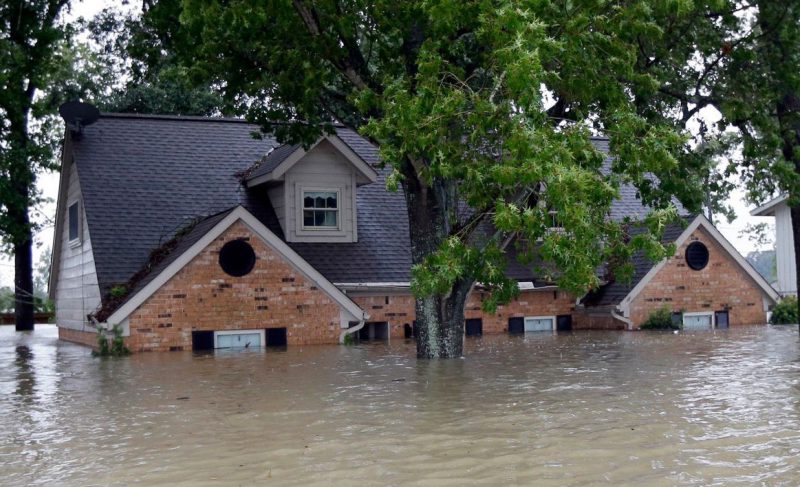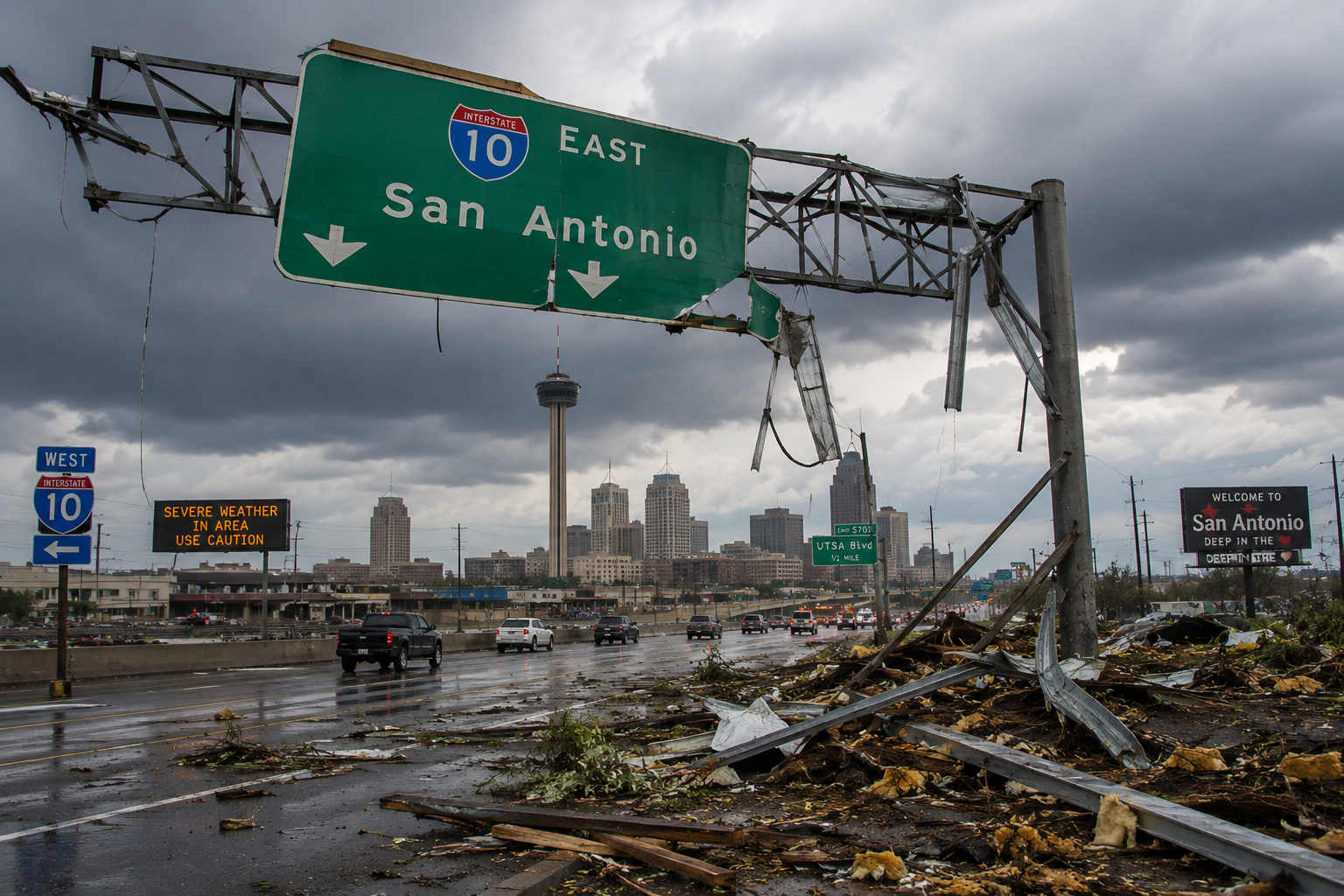

South-Central Texas. July 2026. Governor Greg Abbott said it plainly this week: Texas is responding to a flood that is likely going to break records in state history. A disaster declaration now covers 59 counties. More than 75 people have been pulled from rising water. At the peak on Wednesday, 114 roads across Texas were underwater.
Uvalde County has already received more than half a year’s worth of rain. Sabinal recorded 14 inches in a single day. Boerne, a town of about 25,000 northwest of San Antonio, was placed under a flash flood emergency after Cibolo Creek rose past 22 feet, flooded one of the main roads through town, and forced dozens of water rescues. Two apartment complexes were evacuated. In D’Hanis, forecasters warned homes along Seco Creek could take on up to five feet of water.
The rain will stop. The claims fight is just getting started.
And here’s the hard truth: flood claims are where property owners lose more money than in any other type of loss. Not because the damage is small. Because of how the policies are written.
Let’s walk through it.
Quick Facts: The July 2026 Texas Flooding
- When: July 14 through 16, 2026, with heavy rain continuing through the week
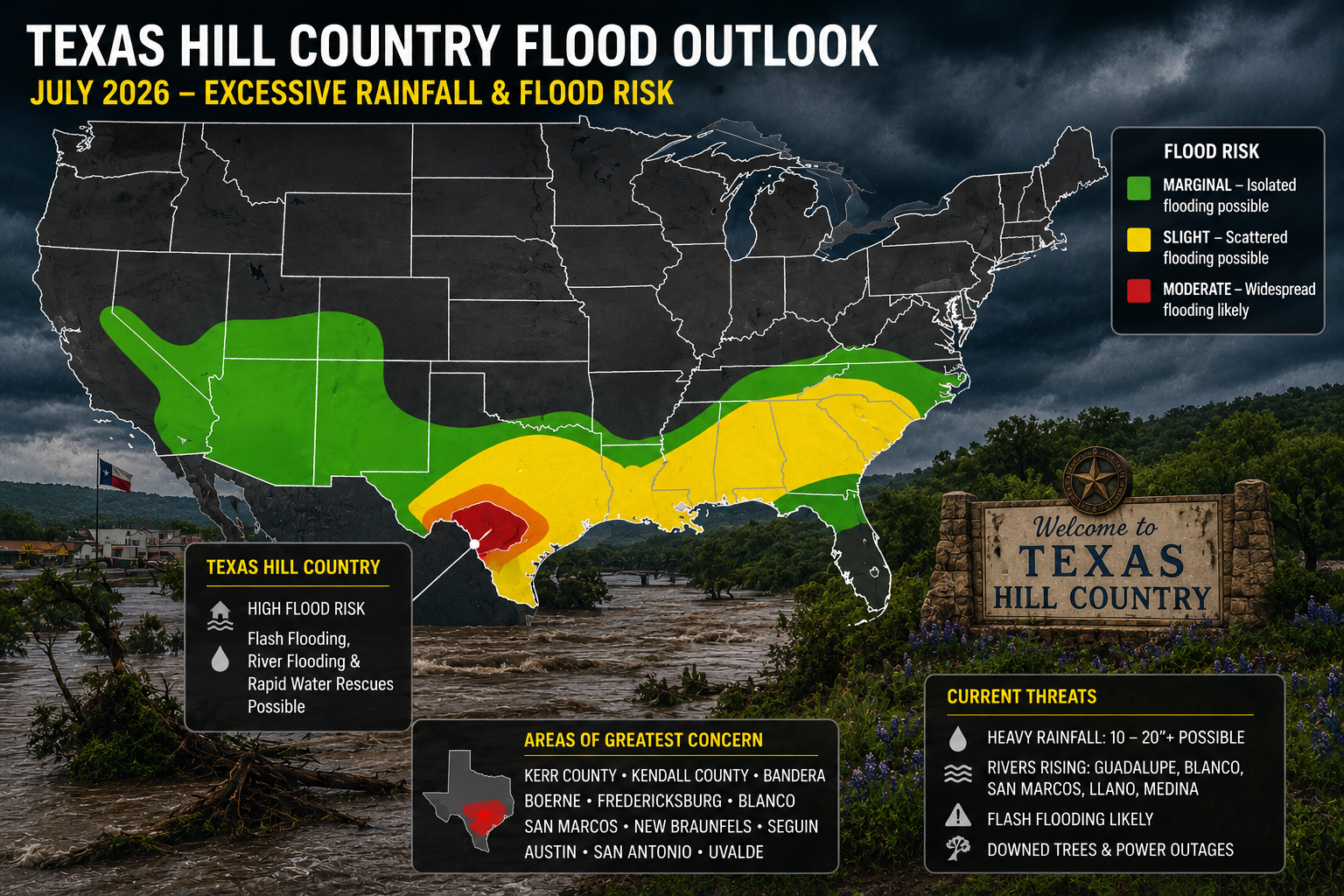
- Where: South-Central Texas and the Hill Country, including Uvalde, Boerne, D’Hanis, Sabinal, Bandera, Medina County, Kerr County, Kendall County and the San Antonio metro
- Rainfall: Up to 16 inches in the hardest-hit areas, with forecasts of 10 to 20 inches in the highest-risk zones. Uvalde County has already received more than half a year’s worth of rain.
- State response: Disaster declaration for 59 counties. More than 800 vehicles and 1,300 state personnel deployed, including National Guard Blackhawk helicopters and boat rescue teams.
- Impact: 75+ water rescues statewide, mandatory evacuations in parts of Uvalde County, flash flood emergencies in Boerne and D’Hanis, 114 flooded roads at the peak, U.S. 90 and U.S. 83 impassable in sections
- Rivers still rising: The Nueces, Frio and Medina Rivers and Cibolo Creek continue pushing floodwater downstream toward Crystal City, Carrizo Springs and Selma
- Casualties: No fatalities reported as of Wednesday evening
- Same system: This storm also produced the confirmed tornado that struck Northwest San Antonio on July 15
The Trap: Your Property Policy Probably Excludes Flood
Here’s what most home and business owners find out at the worst possible moment.
Standard homeowners and commercial property policies do not cover rising water. Flood, surface water, and water that overflows from a creek or river is excluded. Covered flood damage requires a separate flood policy, either through the National Flood Insurance Program (NFIP) or a private flood carrier.
So after an event like this one, every claim gets sorted into buckets:
Wind damage? Covered under your property policy.
Rain through a wind-damaged roof? Generally covered under your property policy.
Rising water from a creek, river or street? Flood policy only.
Both at once? Now you have a fight.
And this storm delivered both at once. Tornado-force winds and torrential rain hit the same region within hours. When wind and water team up on one building, insurance carriers have a strong financial incentive to push as much of the damage as possible into the “flood” bucket, especially if you don’t carry flood coverage.
That sorting decision, made by an adjuster who works for the insurance company, can swing your recovery by hundreds of thousands of dollars.
Who’s making that argument for your side?
If You Have Flood Coverage: The Deadlines Are Brutal
An NFIP flood policy is not like your regular property policy. It’s a federal program with rigid rules, and the paperwork requirements are unforgiving.
You must typically submit a signed, sworn Proof of Loss within 60 days of the loss, with documentation supporting every dollar claimed. FEMA sometimes extends this deadline after major events, but never count on it.
Miss the deadline or under-document the claim, and you can lose the money. Full stop.
NFIP policies also do not cover business interruption or additional living expenses. Knowing what your policy will and won’t pay shapes your entire recovery plan.
Private flood policies have their own terms, their own deadlines, and their own exclusions. Every one of them needs to be read line by line.
Business Owners: Look at Every Coverage You Have
If your business flooded, or even if it stayed dry while the roads around it went underwater, pull your full policy package and look for these:
- Business interruption. If a covered peril damaged your property and closed your doors, lost income and continuing expenses may be claimable.
- Civil authority coverage. Some commercial policies pay when a government order, like the evacuation orders in Uvalde and Boerne or widespread road closures, blocks access to your undamaged business. The triggers are technical and policy-specific, but it’s real money that most owners never claim.
- Extra expense coverage. The cost of relocating, renting equipment, or paying overtime to keep operating.
- Utility service interruption. Some policies respond when off-premises power or water failures shut you down.
- Sewer and drain backup endorsements. Water that backs up through drains during a flood event is sometimes covered separately from the flood itself.
The average owner reads none of this until after a loss. The carrier’s adjuster is not going to volunteer coverages you didn’t ask about. Proving these claims takes financial documentation, forensic accounting, and someone who knows where the money hides inside a policy.
What to Do Right Now: Flood Claim Checklist
- Stay safe and stay out. Floodwater hides electrical hazards, contamination and structural damage. Turn around, don’t drown.
- Photograph and video everything before you touch it. Water lines on the walls. Every room. Every damaged item. Serial numbers on equipment. You cannot over-document a flood claim.
- Report the claim immediately. To your property carrier AND your flood carrier if you have one. Late notice is one of the first tools used to cut claims.
- Mitigate, and keep every receipt. Pull wet drywall, extract water, run dehumidifiers, move contents to safety. Reasonable emergency measures are usually reimbursable, and failing to act can be held against you.
- Don’t throw damaged property away until it’s documented and, ideally, inspected. If health rules force disposal, photograph everything first and keep samples where possible.
- Get a certified copy of every policy you carry. Property, flood, business package, endorsements. The wind-versus-water sorting fight is won or lost inside those documents.
- Watch the mold clock. In Texas summer heat, mold sets in within days, and carriers often cap or exclude mold. Fast, documented mitigation protects both your building and your claim.
- Bring in your own expert before you accept anything. The carrier’s adjuster tells the insurance company’s side of the story. You have the legal right to a licensed Public Adjuster who tells yours.
Homeowners: Don’t Assume You Have Nothing
Even if you don’t carry flood insurance, don’t walk away from your claim before the causation question is answered. In a combined wind-and-water event like this one:
- Wind damage to your roof, fence, siding and trees is a property claim, flood or no flood.
- Rain that entered through wind-created openings is generally a property claim.
- Some damage attributed to “flood” on first inspection turns out, on expert review, to have a covered cause.
And if your home is unlivable from a covered cause, Additional Living Expenses coverage can pay for temporary housing. Families displaced in Boerne, Uvalde, D’Hanis and Sabinal should be asking that question today, not after the hotel bills pile up.
The Wind-vs-Water Fight Is Exactly Why Berkeley International Exists
Berkeley International is a licensed Public Insurance Adjusting firm and the policyholder’s advocate, licensed by the Texas Department of Insurance, with 15 years of experience and more than 5,000 successful claims, including major Texas flood, windstorm and hurricane events.
In a mixed wind-and-flood catastrophe, here’s what we do for you:
- We fight the causation battle. Our building consultants and engineers determine what wind did and what water did, and we prove it, so covered damage doesn’t get dumped into an excluded bucket.
- We handle the paperwork that kills claims. Proof of Loss deadlines, sworn statements, documentation requirements. We assume the burden of proof so nothing slips.
- We read every policy you have. Property, flood, business interruption, civil authority, endorsements. Then we claim everything you’re owed under each one.
- We quantify your business loss. Our forensic accountants document lost income, payroll, and extra expenses down to the dollar.
- We inventory your contents. Every ruined item, documented and priced before it hits the curb.
- We negotiate until it’s right. We speak the insurance company’s language, and we don’t settle for less.
The water is still rising in parts of South Texas. When it recedes, the insurance companies will have their experts on the ground within days. Make sure you have yours.
Call Berkeley International now: 832-225-6957
Free property claim and policy evaluation: berkeleyinternational.org/contact
Frequently Asked Questions About the 2026 Texas Flood and Insurance
Standard homeowners and commercial property policies exclude rising water and overflow from creeks and rivers. Flood damage requires a separate NFIP or private flood policy. However, wind damage and rain entering through wind-created openings are generally covered, which is why the cause of each part of your damage matters so much.
When a storm produces both wind and flooding, carriers must decide which damage came from which cause. Wind damage is typically covered by property policies while rising water is not, so how the damage gets classified can change your payout dramatically. Independent engineering analysis and strong documentation are how policyholders win that argument.
You typically must submit a signed, sworn Proof of Loss with supporting documentation within 60 days of the loss. FEMA sometimes extends the deadline after major disasters, but you should never rely on an extension. Start documenting immediately.
Governor Abbott issued a disaster declaration covering 59 Texas counties, including hard-hit areas like Uvalde, Medina, Bandera, Kendall, Kerr and Bexar counties. The declaration activates state emergency resources for rescue and recovery.
It depends on your policy. Standard business interruption usually requires physical damage from a covered peril, and flood is often excluded unless you carry flood-specific coverage. However, civil authority coverage, extra expense coverage, and utility interruption coverage may respond to evacuation orders and road closures. A professional policy review tells you what you actually have.
Flood claims involve strict deadlines, sworn documentation, causation disputes and multiple overlapping policies. A licensed public adjuster represents the policyholder only, assumes the burden of proof, and typically becomes most valuable exactly in complex claims like these.
Berkeley International. We tell the policyholder’s side of the story. Don’t settle for less. CALL US TODAY! | 832-225-6957